Heading
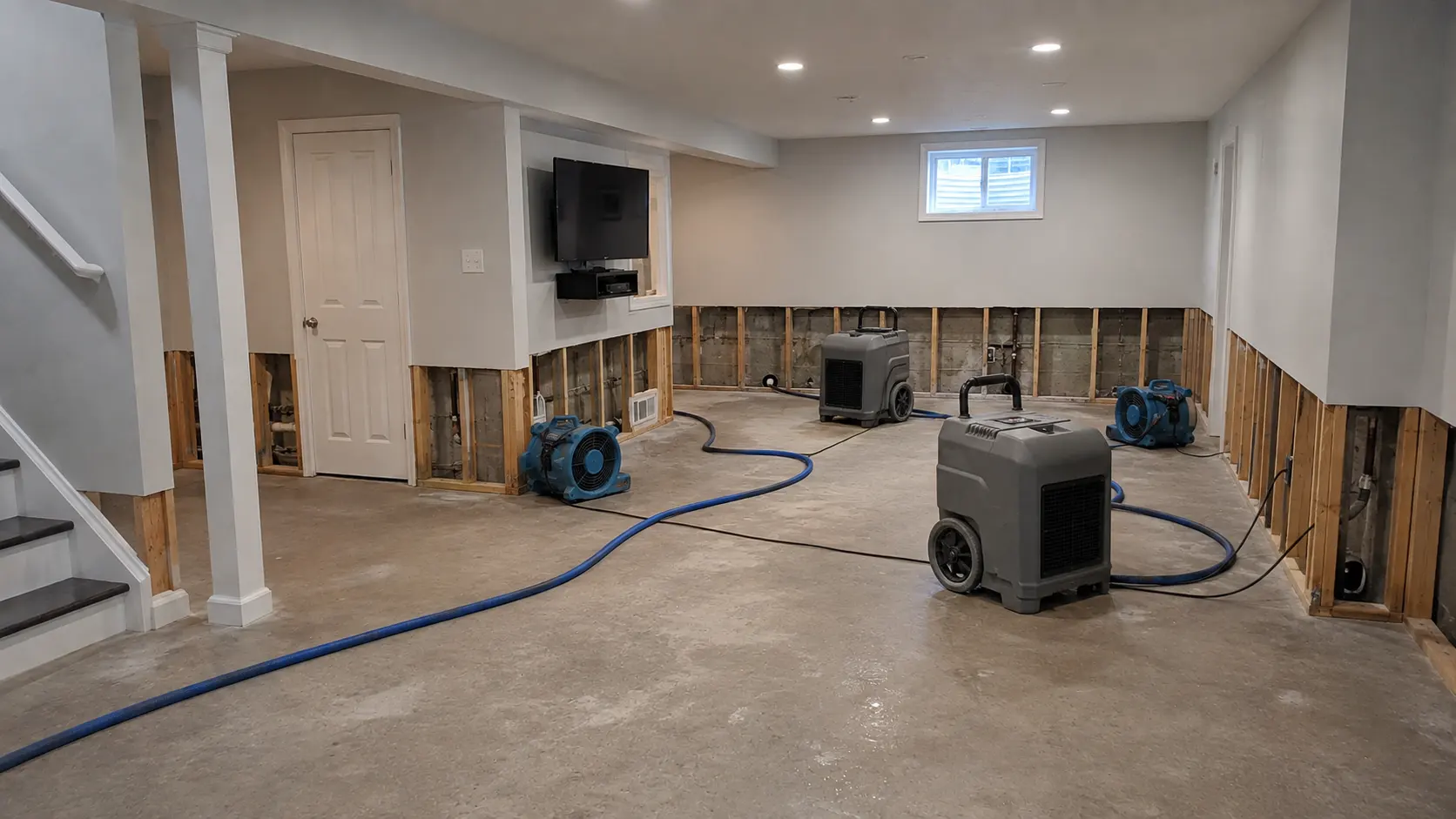
Cleanup And Restoration After A Basement Flood
Learn the complete flooded basement cleanup and restoration process, from water removal and structural drying to flood cuts, drywall repair, and repainting.
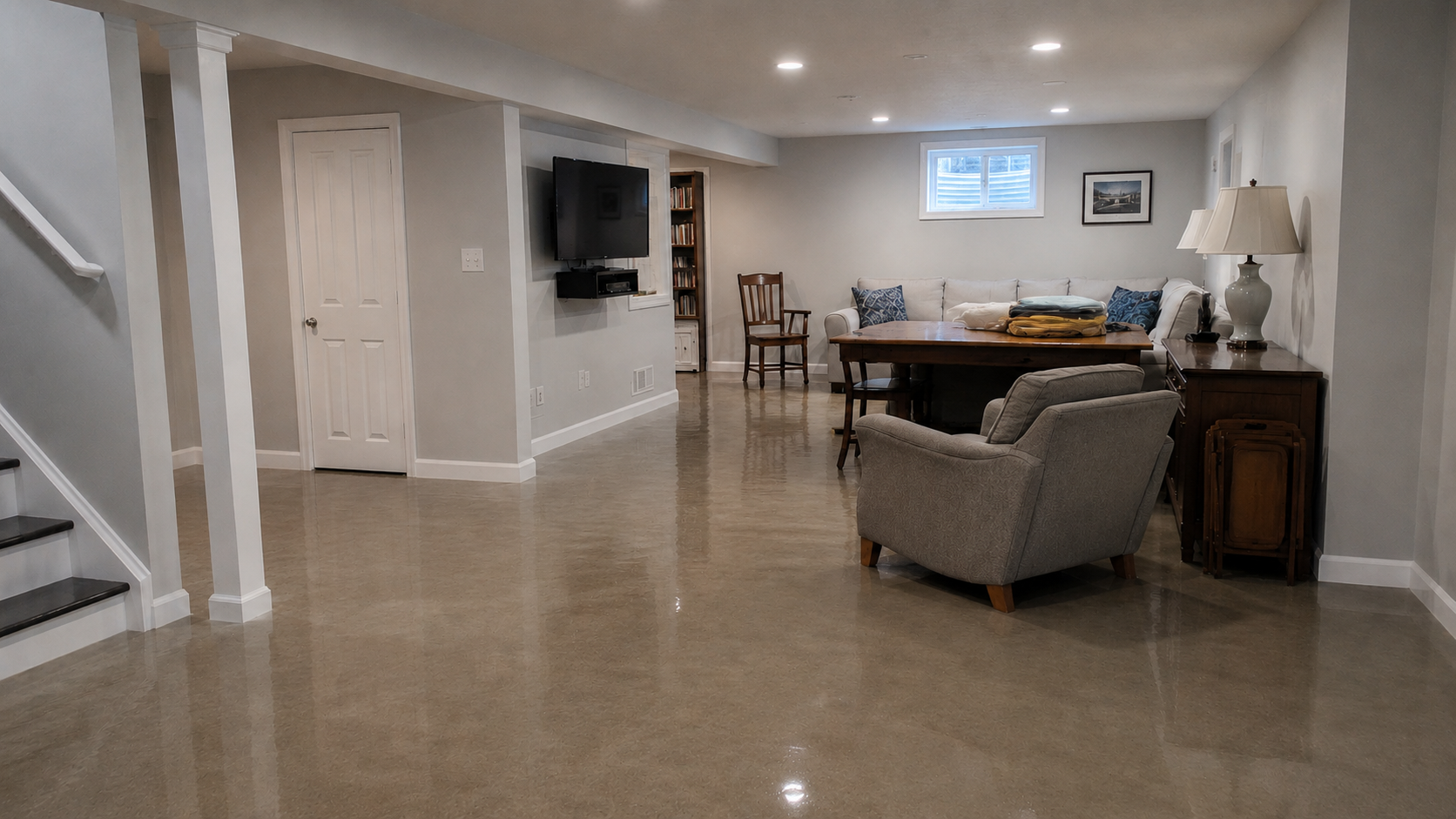
For homeowners in Springfield and Western Massachusetts, MrWalls Drywall & Painting provides basement drywall restoration services that take damaged walls from flood cleanup through finished drywall and repainting.
This second part explains the process we follow after a basement flood, from the point the structural drying is complete, through drywall replacement, taping, finishing, and painting.
Once the wall cavities are clean and dry, reconstruction can begin.
If insulation was removed during flood cleanup, new insulation can be installed where required.
The replacement insulation should match the wall assembly and applicable building requirements.
This stage returns the wall cavity to its intended thermal performance before the drywall is installed.
New drywall is cut to fit the flood-cut opening.
The replacement panels are fastened securely to the existing studs.
Proper installation includes:
The goal is to make the new lower section become part of the existing wall rather than looking like a large patch.
Installing the board is only part of restoring the wall.
The new drywall must then be taped and finished.
Joint compound is applied over the seams, and drywall tape is embedded into the compound.
The technician also coats:
Good taping creates the foundation for a repair that disappears after painting.
One coat of joint compound is not enough for a finished basement wall.
Professional drywall finishing normally requires multiple applications.
A typical repair may include:
The first coat embeds drywall tape and fills the joint.
A wider second coat begins feathering the repaired area into the existing wall.
A thin, wider finish coat removes remaining transitions and prepares the wall for sanding.
Each coat must dry adequately before the next is applied.
The exact finishing method depends on the existing wall texture, lighting, paint sheen, and desired finish quality.
After the joint compound dries, the repaired areas are sanded smooth.
Professional finishing is not simply about making the compound flat. The edges of the repair need to blend gradually into the existing surface.
The wall is inspected for:
Additional touch-up compound may be applied where necessary.
The objective is for the original flood-cut line to disappear.
New drywall and joint compound should normally be primed before painting.
Primer helps seal the porous surface and creates more uniform paint absorption.
Without proper priming, repaired areas can sometimes appear duller or shinier than surrounding painted drywall.
Primer also makes it easier to inspect the completed drywall finish before the final coats of paint are applied.
The final stage of basement drywall restoration after flooding is repainting.
Depending on the repair, painting may involve the affected section or the entire wall from corner to corner.
Painting the complete wall often produces the most uniform appearance, especially when the existing paint has aged or the exact original color is unavailable.
After the final coats are applied, baseboards and other trim can be replaced or repainted as needed.
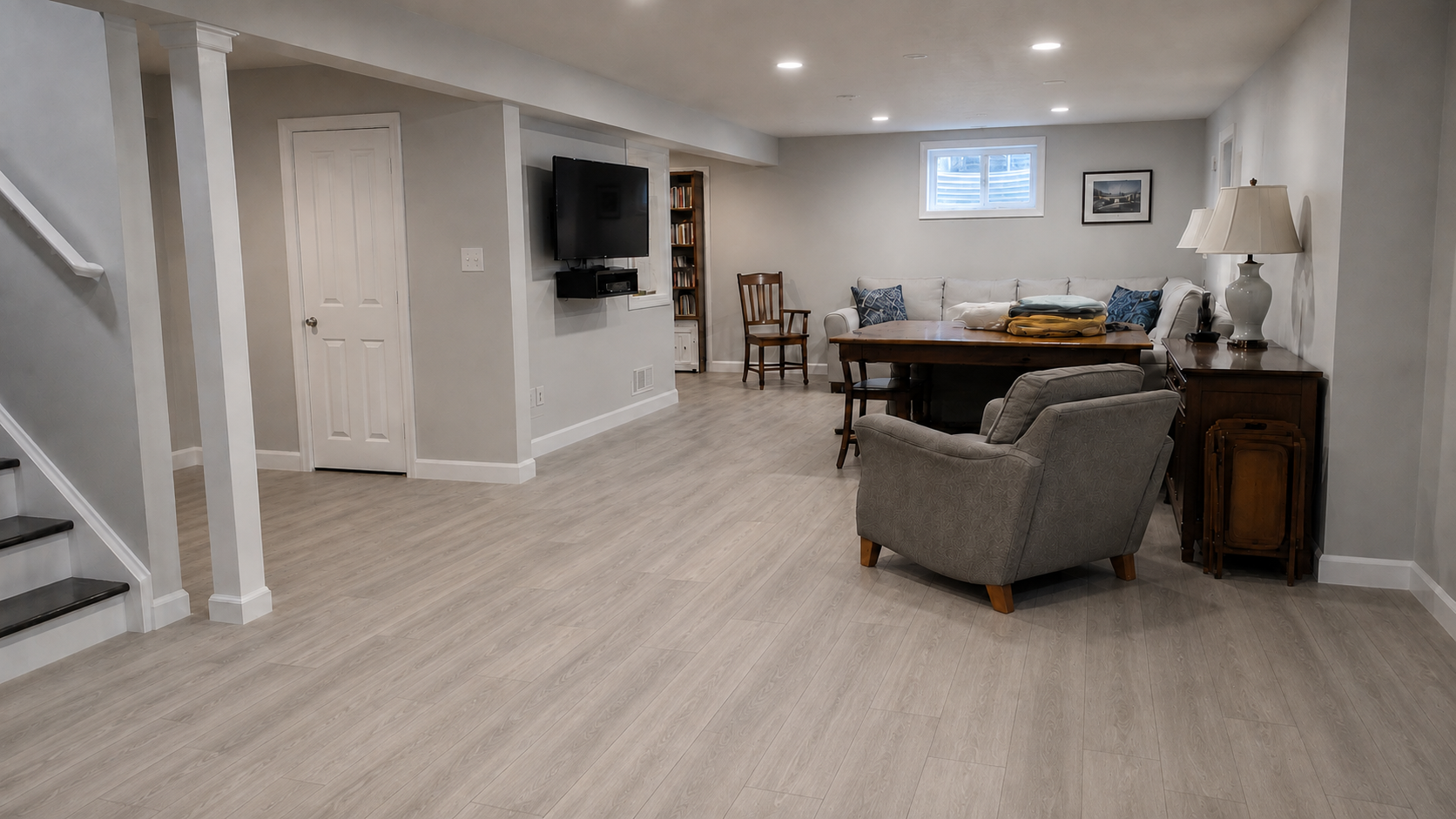
At this point the repaired wall should no longer look like it was opened for flood restoration.
Sometimes minor water exposure does not require extensive drywall removal.
However, drywall that has been saturated by floodwater frequently needs to be removed.
The decision depends on:
When drywall becomes soft, swollen, contaminated, moldy, or structurally damaged, replacement is the only option.
There is no single cut height that works for every flood.
A 2-foot drywall flood cut is common when damage is limited to the lower portion of the wall. It also creates a straight, practical repair area.
However, the actual height should be based on the highest point of moisture or contamination.
FEMA materials have recommended removing wet wallboard and fiber insulation at least 12 inches beyond the high-water line in flood situations.
There is no universal drying time.
Some basements may dry relatively quickly after a small plumbing leak. A heavily flooded finished basement can take considerably longer.
Drying time depends on:
Restoration professionals rely on moisture conditions to determine the time and not simply waiting a fixed number of days.
Flood-soaked insulation generally needs to be removed from affected wall cavities.
Wet insulation can retain water and prevent the framing behind it from drying properly.
Removing the lower drywall without removing saturated insulation can leave a large amount of hidden moisture inside the wall.
Once the structure is clean and dry, suitable new insulation can be installed before the replacement drywall.
One reason flood restoration requires careful inspection is that visible staining does not always show the full extent of the damage.
Water can wick upward through porous materials.
Moisture may also remain inside insulation even though the face of the drywall appears relatively dry.
Time matters after a flood.
The EPA warns that mold can begin developing on wet materials if a flooded home cannot be dried within approximately 24 to 48 hours.
That does not mean every flooded basement automatically has a major mold problem.
It does mean wet materials should be addressed quickly.
Simply covering mold or wet material with new drywall does not correct the underlying problem.
Once the water is gone and the basement has been properly cleaned and dried, the walls still need to be rebuilt.
MrWalls Drywall & Painting also provides professional drywall restoration and finishing for flooded basements in Springfield and surrounding Western Massachusetts communities.
If your basement has already been dried by another contractor, We can take the drywall and insulation portion of the restoration through the rebuilding process. If you have just had a flood our services include:
Having one contractor handle the drywall repair, finishing, and painting helps keep the finished wall consistent from demolition through the final coat of paint.
Removing the standing water is only the beginning of basement flood restoration.
The wall system must be opened where necessary, wet drywall and insulation need to be removed, exposed areas need to be cleaned, and the framing must be allowed to dry before new materials are installed.
Once the basement is ready for reconstruction, professional drywall installation and finishing can return the walls to their pre-flood appearance.
If your basement has flooded in Springfield, Chicopee, or the surrounding Western Massachusetts area and you need help restoring damaged drywall, contact MrWalls Drywall & Painting.
Call: (413) 302-0640
Email: [email protected]
From the drywall flood cut and drying process to replacement board, taping, finishing, priming, and repainting, we can restore damaged basement walls and provide a clean, finished surface again.
A flood cut is a horizontal section of drywall removed from the lower portion of a wall after flooding. It exposes the wall cavity so wet insulation can be removed and the framing can be cleaned, inspected, and dried.
A 24-inch or 2-foot flood cut is common, but it is not a universal rule. The drywall should be removed high enough to eliminate damaged material and expose the full wet area. FEMA guidance has recommended removing affected wallboard and fiber insulation at least 12 inches above the high-water line in flood conditions.
No. The wall cavity and structural materials should be cleaned and adequately dried before new insulation and drywall are installed. Closing a damp wall can trap moisture and contribute to later mold or material damage.
Flood-soaked cavity insulation commonly needs to be removed because it can retain moisture and keep surrounding framing wet. FEMA guidance states that most flooded insulation should be removed and replaced.
That depends on the type and severity of water exposure. Light, clean-water exposure may sometimes be dried. Saturated, deteriorated, contaminated, or mold-affected drywall needs to be removed.
The reconstruction portion will take several visits because drywall compound and coatings need time to dry. The larger variable is the structural drying period before reconstruction starts. A heavily flooded basement may require considerably more drying time than a small plumbing leak.
Yes. Proper installation, taping, multiple coats of joint compound, sanding, priming, and repainting can blend the new lower drywall into the existing wall so the flood-cut repair is no longer obvious.
The drywall first needs to be fully taped, coated, dried, sanded, and inspected. New drywall and joint compound should normally be primed before the finish paint is applied.
Wet drywall can deteriorate, lose strength, retain moisture inside the wall, contribute to musty odors, and support mold growth. Wet insulation behind the drywall can make the problem worse by slowing the drying process.
MrWalls Drywall & Painting (413)302-0640
If You missed Part 1 flood through dryout it is here
Learn the complete flooded basement cleanup and restoration process, from water removal and structural drying to flood cuts, drywall repair, and repainting.